History
Once a master in precision engineering –
Today a modern technology company.

- Stimulation device for rehabilitation and mobilization through neuromodulation
- SensorStim is a Berlin-based start-up in the field of device and software development, in which PAJUNK has held a majority stake since 2024.


Device for limiting the injection pressure of a medical instrument for introducing a fluid.

Benelux, Denmark, Norway, Poland, Switzerland


- Implementation of NRFit® regulations for greater patient safety (ISO standard 80369-6) as one of the first manufacturers
- Precursor: Surety® connector – was already launched when the standard came into force in the UK in 2010

Performing continuous peripheral nerve blocks as easily as the single-shot technique.

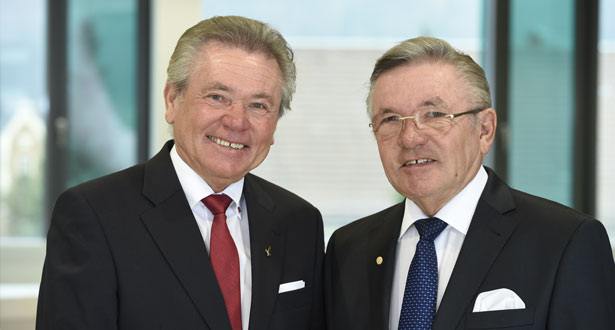
Horst and Heinrich Pajunk have established a firm foundation on which subsequent generations can build with confidence. Their credo has stood the test of time: listen, develop, implement. “Every generation has its own vision,” says Martin Hauger. “Our objective was to develop PAJUNK from a workshop into an international industrial company.” What does the future hold? The next generation will also find its own way. However, one thing is for sure:

- Objective: precise catheter placement with minimized dislocation rate
- Created for uniform spread of the anesthetic at the distal end


Construction of the sono-needle range with echogenic Cornerstone Reflectors for precise placement of nerve blocks under ultrasound. Optimized echogenicity helps the ultrasound process to achieve a breakthrough.


Uniform wound infiltration for large incisions and joint replacement operations.

Coated needles for continuous peripheral nerve blocks with a stimulable catheter.


Innovative needle coating, also in the inner lumen, creates a highly precise electrical field during needle placement.
DeltaCut, CoreCut, PrimoCut with Chiba biopsy needles
Development in close collaboration with trendsetters: Dr. Marhofer, Dr. Kapral, and Dr. Grau

Continuous peripheral nerve blocks become the new benchmark in regional anesthesia.
- Unipolar needles for continuous conduction anesthesia
- First coated, stimulable needle from PAJUNK (Catheter Through Needle Technique) in peripheral anesthesia


Establishment of own branches and local trading partners with great reputations.
Sales in Germany & Austria with direct user contact.


Device for performing plexus anesthesia: plexus needles for continuous, axillary blocks, without stimulation, pioneering the Catheter Over Needle Technique.


The outcome of a five-year development partnership: a new design standard for the tip geometry of atraumatic needles with the aim of making spinal anesthesia accessible to a wider range of patients.


Innovative Strength from Hands-on Experience: From Listening to Doing
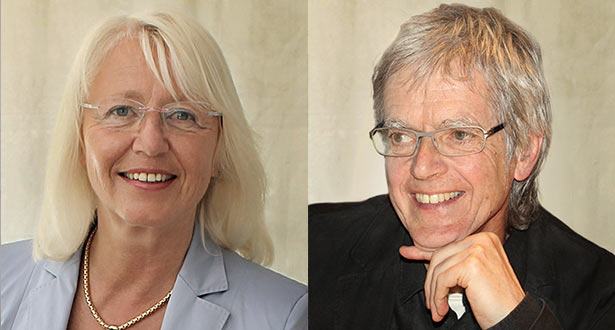
Despite growing in size, PAJUNK has retained its family character. “We listen to our customers,” explains Simone Pajunk-Schelling, “that was the secret of our success back then and it remains true to this day.” This is how innovative products such as the sono-needle for ultrasound-supported regional anesthesia or the e-catheter system for simplifying continuous blockades were developed. The company has also extended its needle expertise to pain therapy and neurology, where it is opening up exciting new areas of business.
“We consistently succeed in identifying trends in medical technology from an early stage,” says Martin Hauger. “This gives us a head start in new market segments.” Close collaboration with doctors and scientists remains our source for new ideas and innovations. “We always include technical implementation in our deliberations,” emphasizes Simone Pajunk-Schelling. “I learned this skill from my father.”
- Internationalization and development of the PAJUNK brand in direct sales
- Greater closeness to our end customers
- Comprehensive product range for regional anesthesia and interventional biopsy
- From workshop to series production: introduction of a quality management system and digitalization/automation
The Second Generation: From Workshop to Global Player
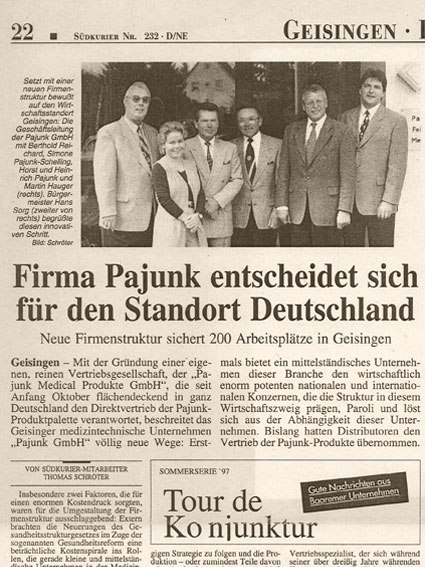
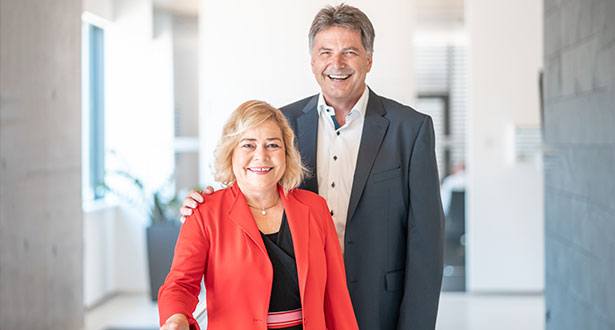
In 1993, Simone Pajunk-Schelling and Martin Hauger took the helm of the company. They shared a clear vision: to step up from OEM supplier to an independent, international brand. “It was simply the right time,” recalls Simone Pajunk-Schelling. “Our sense was that, as an OEM supplier, we could not fully realize our own potential.” PAJUNK defined new benchmarks in medical technology with its own subsidiaries and products marketed under its own name. At the same time, the company took advantage of the opportunities offered by digitalization, defined manufacturing standards, automated production processes, and established a professional quality management system. However, as the company grew, so did the challenges it faced. “The pace of change has increased considerably in recent decades,” confirms Martin Hauger, adding: “Time and again we faced the challenge of satisfying new market requirements – a current example being the regulatory environment“.
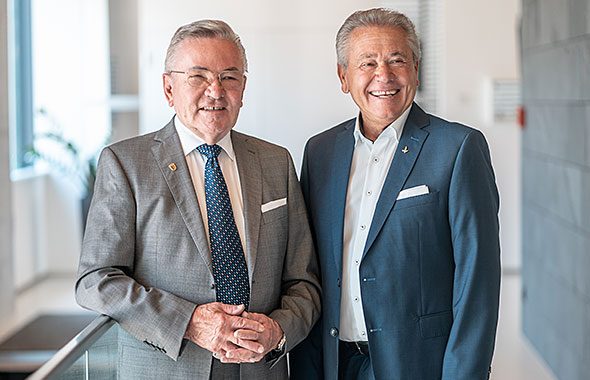
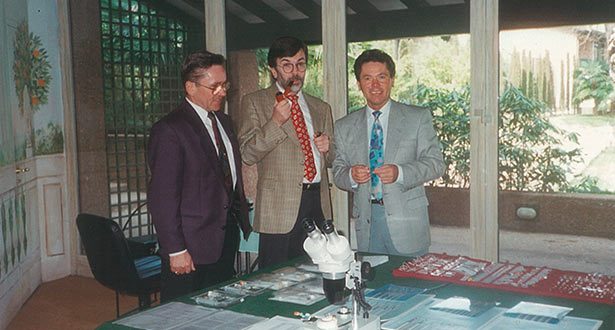
“As word got around about what our company can do, more and more doctors from the field of regional anesthesia approached us with their development ideas,” states Horst Pajunk with confidence. The SPROTTE® needle delivered success. However, it took another decade before PAJUNK was able to market the needle under its own name. The company has remained true to its principle of taking bold steps and risks – tempered with caution. Even when large companies made them takeover offers, the brothers turned them down. “Our wish has always been to remain an independent family business,” says Horst Pajunk. “The second generation has taken what we were able to build up and, with their expertise, they have taken us to the next level,” adds Heinrich Pajunk.
- Growing demand for development partnerships
- Focus on medical technology products (regional anesthesia, biopsy, minimally invasive surgery, dental)
- Help in shaping the paradigm system shift to disposable products
- First coated and stimulable PAJUNK single-shot needle
- Liver biopsy needles in acc. with Menghini
- TrokaBone needles
- Bone marrow biopsy needles in acc. with Klima and Rosegger
- Prostate biopsy needles in acc. with Franklin H. Silverman
The Turning Point: From Contract Manufacturing to Product Development
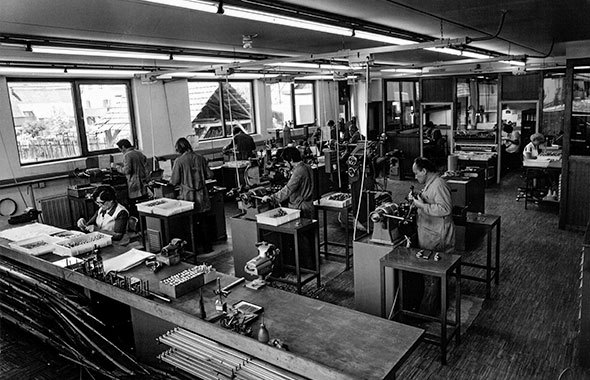
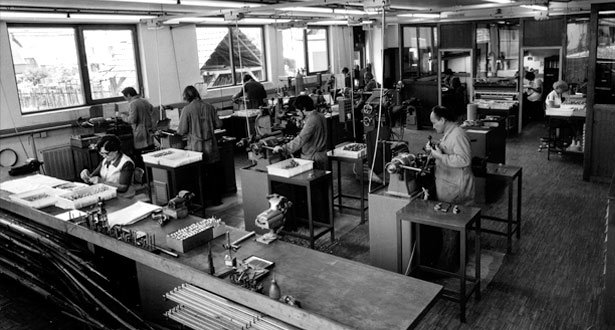
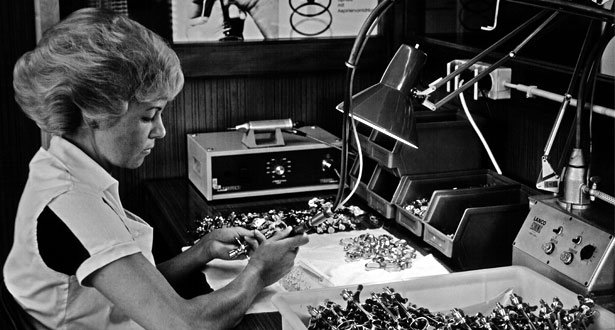
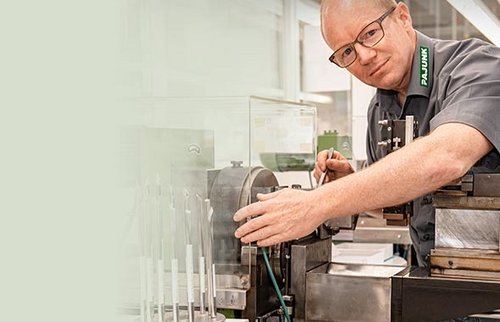
In its early days, PAJUNK operated solely as a contract manufacturer. The brothers left no stone unturned to create financial stability for their company. However, their real passion was product development. They were talented craftsmen who delighted in trial-and-error progress. Their collaboration with Dr. Sprotte was a decisive turning point. The young doctor was looking for a partner to turn his idea for an atraumatic spinal needle into reality. The big medical technology companies turned him down – PAJUNK seized this opportunity.
They experimented together day and night, creating prototypes and continuously fine-tuning them. Just one year later, the three filed a patent application for the first SPROTTE® needle - a milestone that established PAJUNK as an innovative OEM manufacturer. “During this time, each of us was infused with a shared pioneering spirit,” recalls Horst Pajunk and continues: “Dr. Sprotte was enthused by our passion, and we were proud that a doctor had approached us to turn his vision into reality.”
It took them ten years before they took the daring step of becoming self-employed and gaining full independence. “We stayed the course because we knew we had more in the proverbial tank,” says Heinrich Pajunk.
So what has this impressive success story involved? An interview with the founders as well as the next generation provides deep insights into the philosophy that remains the hallmark of this company today.
How It All Began: A Tough Road to Independence
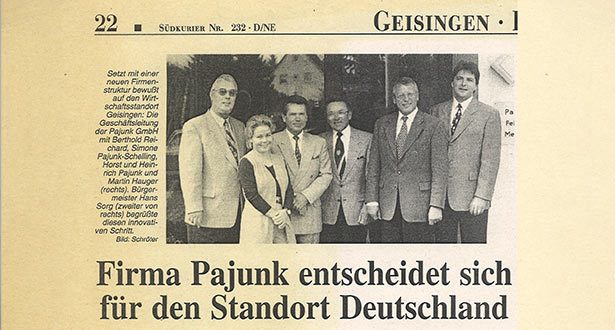
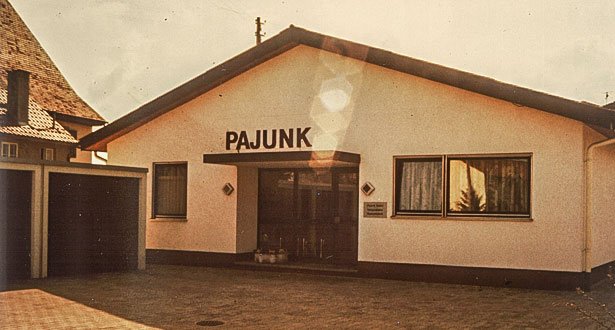
During the war, the parents of Horst and Heinrich Pajunk lost everything. In the Fifties, they settled in the town of Geisingen where they all pulled together to create a new home. Back then, nobody could have guessed that the foundations for a successful company were getting laid in the garage-based business. “We really did start out with nothing,” recalls Horst. That was the era of the economic miracle, a time for pioneers, movers and shakers. If you were willing to put in the hard work, you could make something out of nothing. Horst worked as a surgical mechanic in medical technology, whereas Heinrich worked as a toolmaker in the machine industry. The idea of combining their two specialisms came from Heinrich Pajunk: “What do you think about combining our strengths in mechanical engineering and medical technology?” A question that defined the beginning of an extraordinary journey to a corporate future.